
Yangon Zoological Gardens
Wildlife • Conservation • Education
Open Daily • 8 am to 5 pm
50 years
he great hornbill’s diet mainly consists of fruits, especially figs, but they also eat small animals, insects, lizards, birds, and eggs occasionally.
The great hornbill’s habitat is dense, tropical, and subtropical forests, especially evergreen and deciduous forests in hilly or mountainous regions, where there are plenty of large trees for nesting and fruiting trees for food.
The Great Hornbill is native to Southeast Asia, including Eastern India, Nepal, Bhutan, Myanmar, Thailand, Malaysia and Indonesia (Sumatra and Borneo). They are found in mountain forests up to 4,000 feet in elevation
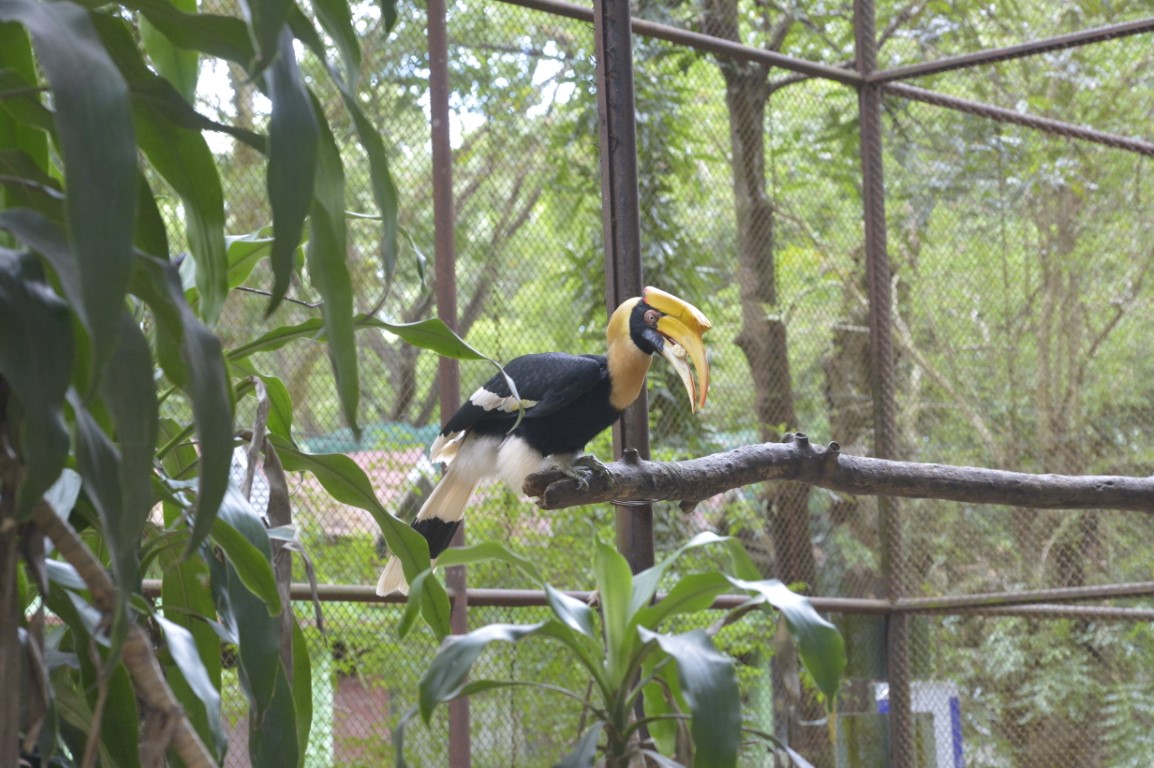
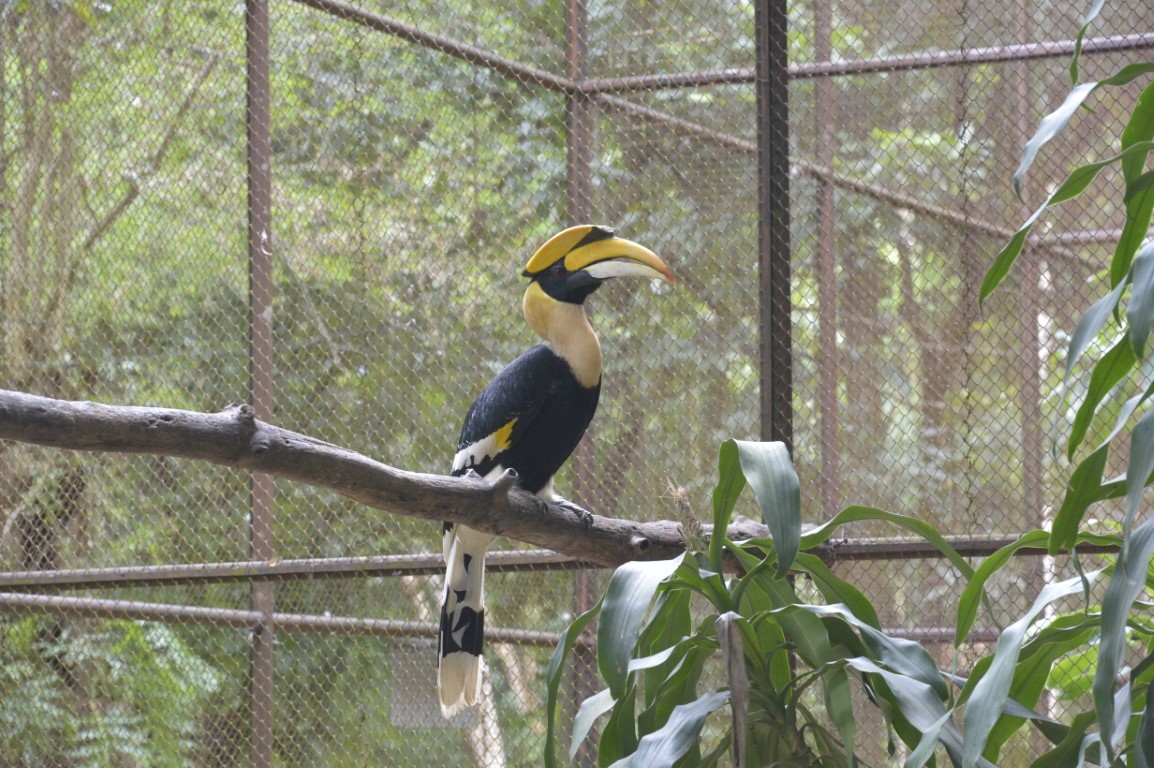

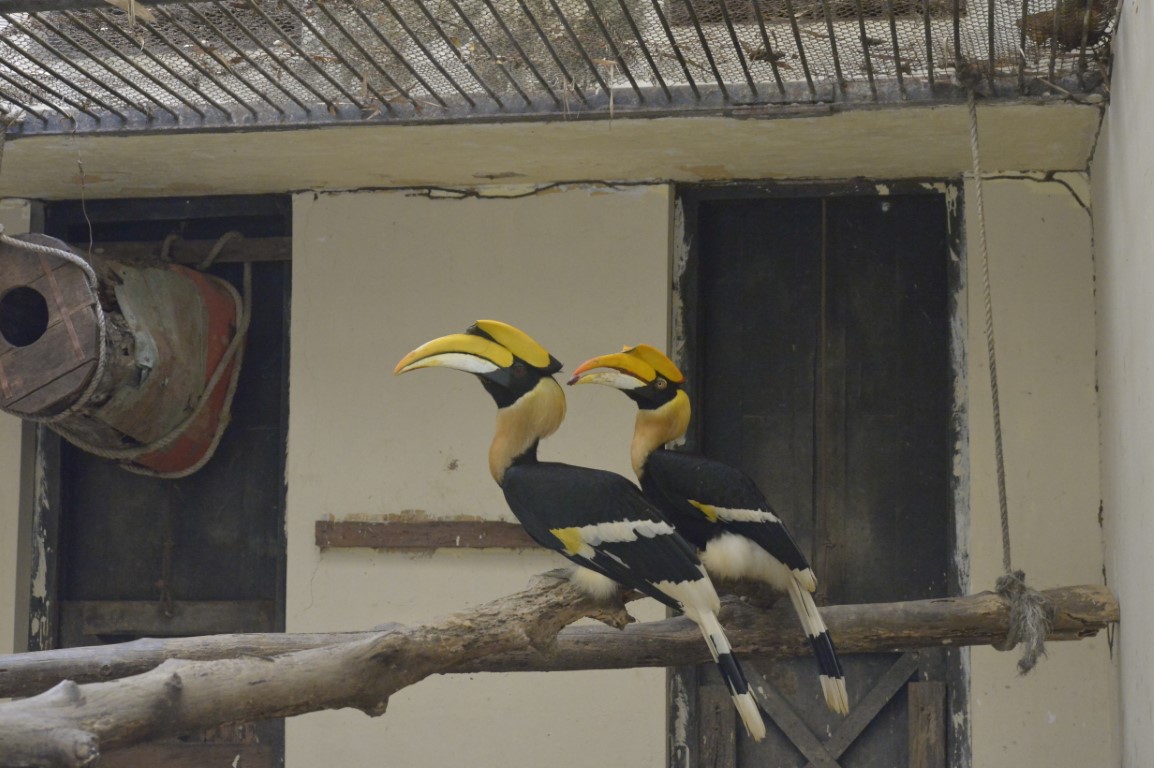
The eyes of males are usually red, while those of females are white or pale (blue/green). On the casques above the head, males are usually black, whereas females are often red.
Great hornbill is classified as Vulnerable (VU) on the IUCN Red List