
Yangon Zoological Gardens
Wildlife • Conservation • Education
Open Daily • 8 am to 5 pm
In the wild mandrills can live for 20 years and they often live longer managed care 25 to 30 years in captivity.
Ominivore ; fruits, seeds, roots, tubers, leaves, fungi, insects, ants, termites, snails, small reptiles and amphibians, and occasionally bird eggs or other small vertebrates.
Tropical rainforests and dense secondary forests; they also use thick bush and forest edges
Mandrills live in equatorial Africa, mainly in southwestern Cameroon, Gabon, Equatorial Guinea, and the southwestern Republic of the Congo
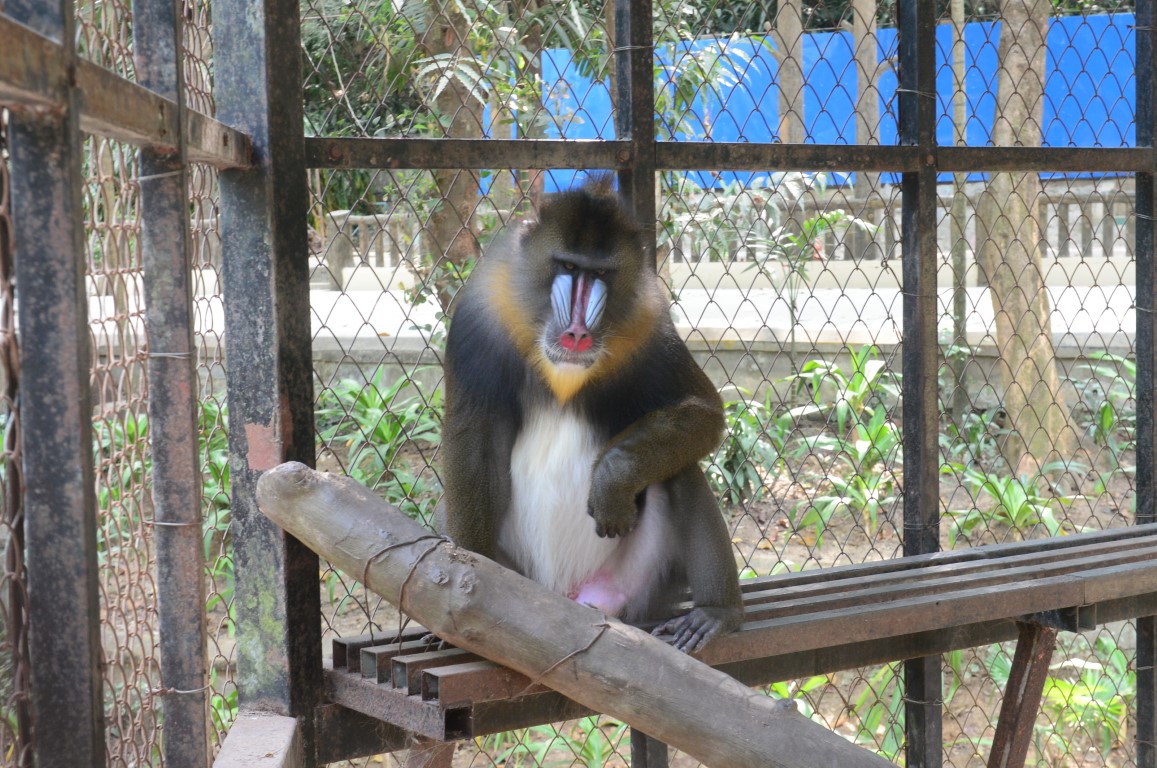
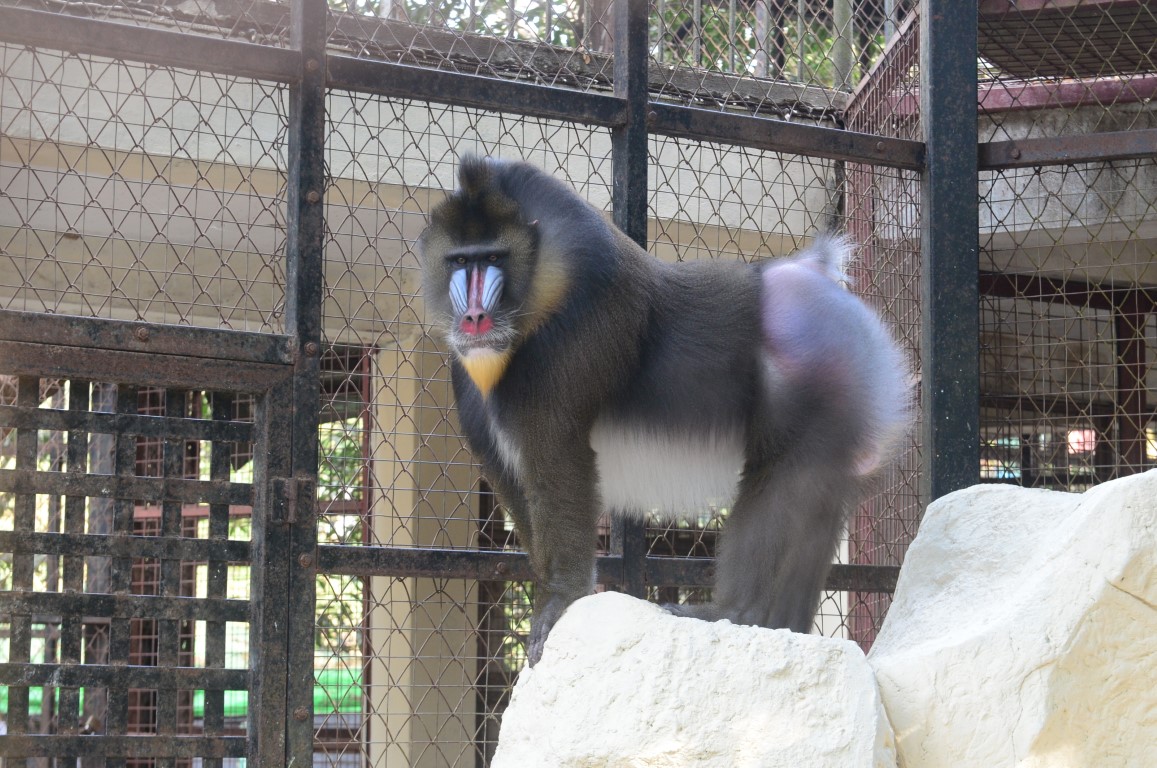
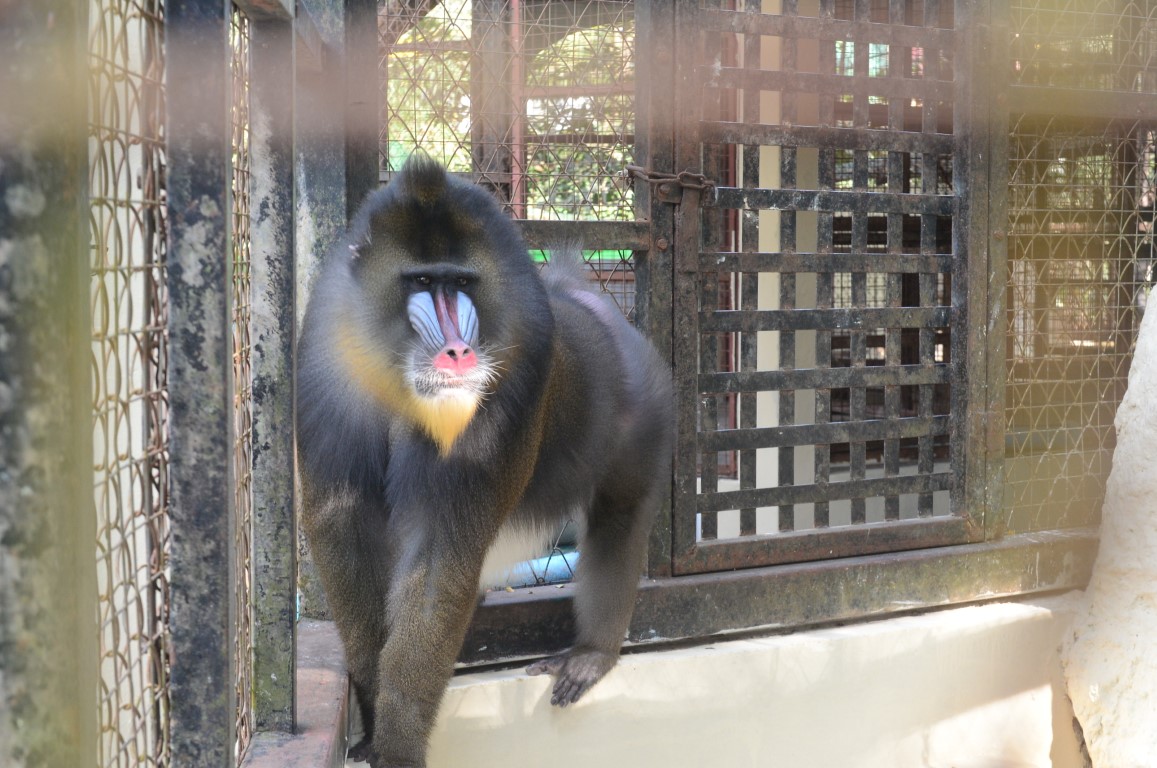
Mandrills are the largest monkeys, with males much bigger than females, and they have stout bodies with strong limbs, a short tail, large canine teeth, cheek pouches for food, and in males, bright blue and red facial and rump skin that becomes more vivid during social and mating displays.
Mandrill is classified as Vulnerable (VU) on the IUCN Red List